 English
 KR
KR  IA
IA  JP
JP 

Setup of Hospital Laboratory
Establishing a Modern Hospital Laboratory in Nigeria to ensure accurate and timely diagnostics is essential for effective healthcare delivery. From identifying life-threatening infections to monitoring chronic diseases, a fully functional hospital laboratory is essential for quality medical care. Unfortunately, many Nigerian hospitals still operate with outdated diagnostic equipment, limited test capabilities, and staffing shortages leading to delayed or incorrect diagnoses and compromised patient outcomes.
The Hospital Laboratory Project is a transformative initiative aimed at bridging this critical gap by establishing a world-class, fully integrated diagnostic facility within a hospital setting. Designed to meet international standards, this laboratory will provide a wide array of tests across multiple disciplines, support rapid disease detection, and enhance clinical decision-making. The facility will incorporate advanced technologies, skilled professionals, and efficient systems to deliver reliable and fast diagnostic services to the public.
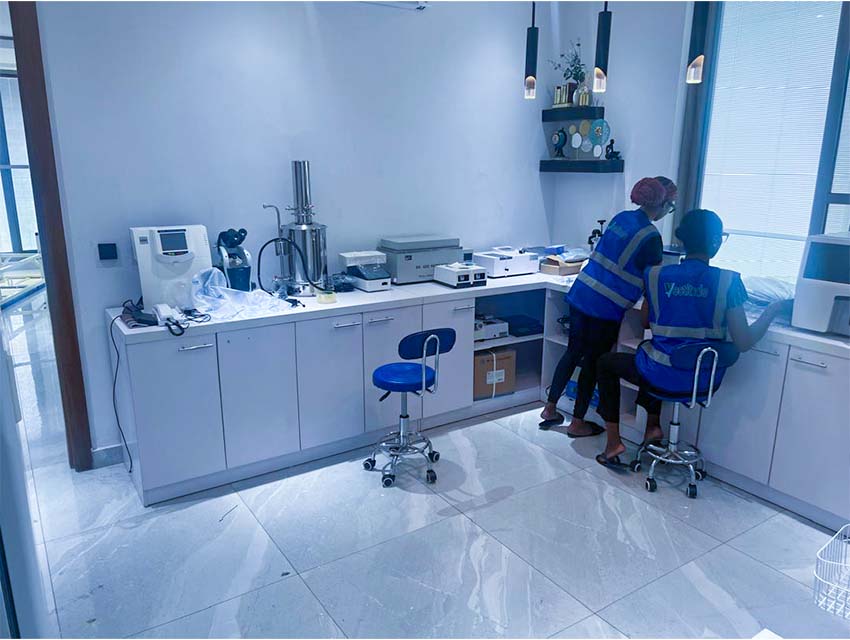
From identifying infections and chronic illnesses to monitoring treatment outcomes, hospital laboratories play an essential role in supporting clinical decision-making. However, in many Nigerian hospitals, access to fully equipped and functional laboratories remains limited. This gap contributes to delayed diagnoses, mismanagement of diseases, and increased patient mortality.
The COVID-19 pandemic further highlighted the importance of laboratory services, revealing systemic weaknesses in diagnostic infrastructure. Routine tests for diseases such as malaria, HIV, tuberculosis, hepatitis, and diabetes are often hindered by outdated equipment, reagent shortages, or inadequate staffing. For a healthcare system to function effectively, there must be a reliable, modern laboratory at its core.
The Hospital Laboratory Project aims to address this need by establishing a state-of-the-art diagnostic facility that will serve as the backbone of clinical care. Designed to meet international standards, this laboratory will ensure precision testing, faster turnaround times, and improved treatment outcomes.
Solution
Improved Diagnostic Accuracy and Speed
Job Creation and Capacity Building
Reduced Dependence on External Labs
Project Objectives
The primary goal is to create a fully integrated, modern medical laboratory within a hospital setting, capable of delivering a wide range of diagnostic services across multiple disciplines including:
- Clinical Chemistry
- Hematology
- Microbiology
- Parasitology
- Immunology and Serology
- Molecular Diagnostics
To establish a fully equipped, modern hospital laboratory with diagnostic capabilities across clinical chemistry, hematology, microbiology, parasitology, immunology, and molecular diagnostics.
To deploy digital Laboratory Information Management Systems (LIMS) for sample tracking, data accuracy, and efficient reporting.
To recruit, train, and retain qualified personnel for laboratory operations, quality assurance, and biosafety.
To implement a comprehensive quality control framework that aligns with national and international diagnostic standards.
To support hospital-based disease monitoring, treatment planning, and public health data collection.

Proposed Timeline
Phase 1: Feasibility Study & Planning – 6 months
- Define technical requirements, recruit project consultants, and secure necessary approvals
Phase 2: Infrastructure Development – 12 to 15 months
- Procure and install diagnostic equipment, LIMS, and biosafety infrastructure
Phase 3: Staffing, Training & Certification – 4 to 6 months
- Implement quality control systems and conduct regulatory inspections.
Phase 4: Operational Launch – 3 months
- Begin offering routine and specialized diagnostic services to hospital patients and external referrals.
Phase 5: Expansion & Research Collaboration – Ongoing
Collaborate with research institutions and public health agencies for data sharing and innovation